What are the signs you need Radon Mitigation?
The clearest sign is a radon test result at or above 4.0 pCi/L, the level where the EPA and the U.S. Surgeon General recommend fixing any home. (alabamapublichealth.gov) Indoor radon averages about 1.3 pCi/L nationally and outdoor air about 0.4 pCi/L, so a reading several times higher is your signal to act. (alabamapublichealth.gov)
Radon is a gas you can't see, smell, or taste. It comes from natural uranium in soil and rock, and it moves up through the ground and into your home through cracks in the foundation, gaps around pipes, sump pumps, and even the pores of concrete block. That's why the only way to know your level is to test. A neighbor's result tells you nothing about your house, even if you live two doors down on the same street.
In Huntsville and across Madison County, we see a lot of homes test in the 4 to 10 pCi/L range, and some come in higher. Madison County is one of 15 Alabama counties the state names as having the highest radon potential, along with Colbert, Franklin, Jackson, Lauderdale, Lawrence, Limestone, and Morgan across north Alabama. (alabamapublichealth.gov) That doesn't mean every house here has a problem, but it does mean testing should be on your list, especially if you've never done it.
The other sign is less about a number and more about your situation. If you've got a basement you use every day, a finished lower level, or a home built on a slab with a lot of foundation cracks, your risk of a higher reading goes up. Same if you've recently done a major renovation that disturbed the slab or added a new addition. Radon moves through soil and concrete in ways that can change after you break ground.
- A radon test result of 4.0 pCi/L or higher. (alabamapublichealth.gov)
- A reading between 2.0 and 3.9 pCi/L that you want to lower, especially if you spend a lot of time in the lowest level.
- You live in Madison County or another north Alabama county the state flags for high radon potential. (alabamapublichealth.gov)
- You've never tested, or it's been more than two years since your last test.
Short version
- 4.0 pCi/L or higher: fix it. (alabamapublichealth.gov)
- 2.0 to 3.9 pCi/L: consider mitigation, especially if you use the basement daily.
- Below 2.0 pCi/L: retest every couple of years or after major renovations.
- No test yet: start there. A test is the only sign that counts.
Warning signs to watch for
Radon gives you no physical warning signs. No headaches, no coughing, no musty smell. The warning signs are all about your home's construction and your habits: a basement you sleep in, a sump pump that runs often, foundation cracks you can slide a coin into, or a test kit that's been sitting in a drawer for three years.
We get calls from homeowners who say they feel fine, so they figure radon isn't an issue. That's backwards. Radon-related health risks come from long-term exposure, and the symptoms, when they show up, look like other lung issues. You won't feel a 6 pCi/L reading. You'll just live with it. That's why the test matters more than how you feel.
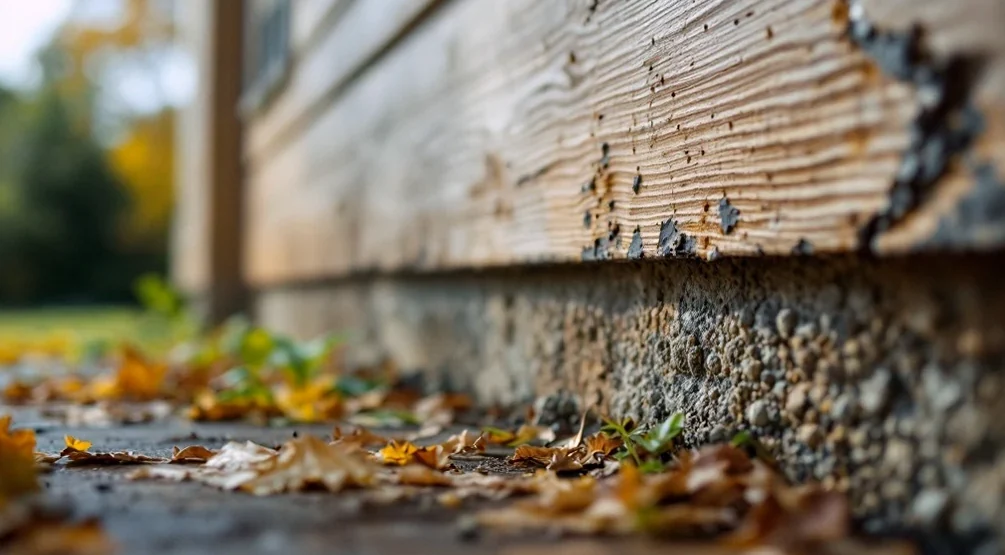
Look at your foundation. A poured concrete slab with visible cracks, a block foundation with open mortar joints, or a crawlspace with a bare dirt floor all give radon an easier path inside. If your sump pump pit is open to the soil and not sealed, that's a direct line for soil gas. We see this a lot in older Huntsville neighborhoods like Five Points and Old Town, where homes were built before anyone thought about radon.
Your daily routine matters. If you've turned a basement into a bedroom, a home office, or a playroom, you've increased the hours you spend in the part of the house where radon levels are usually highest. Radon is heavier than air, so it tends to pool in lower levels. A reading of 3.5 pCi/L in a basement you never enter is a different situation than the same reading in a basement where your kid does homework every night.
Test result 4.0 pCi/L or higher
This is the level the EPA and the U.S. Surgeon General say to fix. Schedule mitigation. (alabamapublichealth.gov)
Test result 2.0 to 3.9 pCi/L
Not an emergency, but worth lowering if you use the lowest level daily. Retest in a few months to confirm the number.
No test, or test older than two years
You don't know your level. Test first. It's the only way to see if mitigation is needed.
What causes these problems in Huntsville
North Alabama's geology is the main driver. The same limestone and shale formations that give us caves and springs also contain trace uranium that decays into radon. Madison County sits in a band the state identifies as having the highest radon potential, so soil gas here can carry more radon than in other parts of Alabama. (alabamapublichealth.gov)
Huntsville's building stock adds to it. We have everything from 1940s bungalows in Five Points to new construction out in Madison and Harvest. Older homes often have unsealed crawlspaces, cracked slabs, and original drain lines that leave gaps in the foundation. Newer homes are tighter, which is good for your power bill but can trap soil gas inside if the home wasn't built with a radon-resistant setup. A tight house with no mitigation can hold a higher concentration than a drafty one.
The Tennessee Valley also has a lot of karst, which is limestone that water has dissolved into cracks and voids over time. That kind of geology gives radon a lot of pathways. We've pulled test results from homes near Monte Sano and over in Owens Cross Roads that came in higher than the homeowner expected, because the soil under the house was doing what soil here does.
Weather matters, but not the one people guess. Radon levels often run higher in winter when the ground is cold and the house is closed up, because the stack effect pulls more soil gas inside. Summer readings with windows open can look lower. That's why a short test during a mild week might miss a problem that shows up in January.
A tight, newer home on north Alabama soil can hold more radon than an old drafty one. Sealing a house doesn't seal out radon; it can concentrate it.
What happens if you ignore the signs
Nothing visible happens right away. Radon decays into radioactive particles that can get trapped in your lungs when you breathe, and the risk builds over years of exposure. The EPA and the U.S. Surgeon General recommend fixing any home at or above 4.0 pCi/L for that reason. (alabamapublichealth.gov)
The practical downside shows up when you sell. A buyer's inspector will test, and a high result gives the buyer a negotiating chip. You either pay for mitigation then or drop your price. Doing it on your own schedule, before a sale is on the table, keeps you in control of the timeline and the cost. We've installed systems for sellers who wished they'd handled it two years earlier.
There's also the daily exposure piece. If your basement reads 8 pCi/L and your family spends four hours a day down there, that's years of breathing air that's several times the national indoor average of about 1.3 pCi/L. (alabamapublichealth.gov) You can't undo past exposure, but you can stop adding to it. Mitigation typically drops levels below 2.0 pCi/L, and often below 1.0.
Cost is the other thing people put off. A standard slab-on-grade system in Huntsville runs $800 to $1,500 installed. (huntsvilleradonpros.com) Add professional testing at about $150 to $700 and permits at $25 to $150, and you're looking at a total that often lands toward the upper end if your home is larger, has a finished basement, or needs a more complex pipe run. (angi.com) That's the range to plan for, and the only way to get an exact number is a free on-site quote.
Waiting doesn't make the number go down. Radon levels fluctuate with weather and season, but the source, the soil under your house, stays put. A home that tests at 5 pCi/L in March will usually test in the same neighborhood next March. The fix is mechanical and permanent: a pipe, a fan, and a sealed foundation. Once it's in, you retest to confirm it's working and then you're done.
Worth it when
- Your test is 4.0 pCi/L or higher. (alabamapublichealth.gov)
- You use a basement or lower level daily.
- You're planning to sell in the next year or two.
- You live in Madison County or another high-potential county. (alabamapublichealth.gov)
Hold off when
- Your test is below 2.0 pCi/L and you rarely use the lowest level.
- You haven't tested yet. Test first, then decide.
- Your reading is 2.0 to 3.9 pCi/L and you want to retest before committing.
Sources
Need radon mitigation in Huntsville? Get a free estimate today.
📞 256-567-5330